
Breakdown of a street photo: Constructing Order in a Chaotic Space
This photograph works because it feels designed, even though it’s entirely candid.
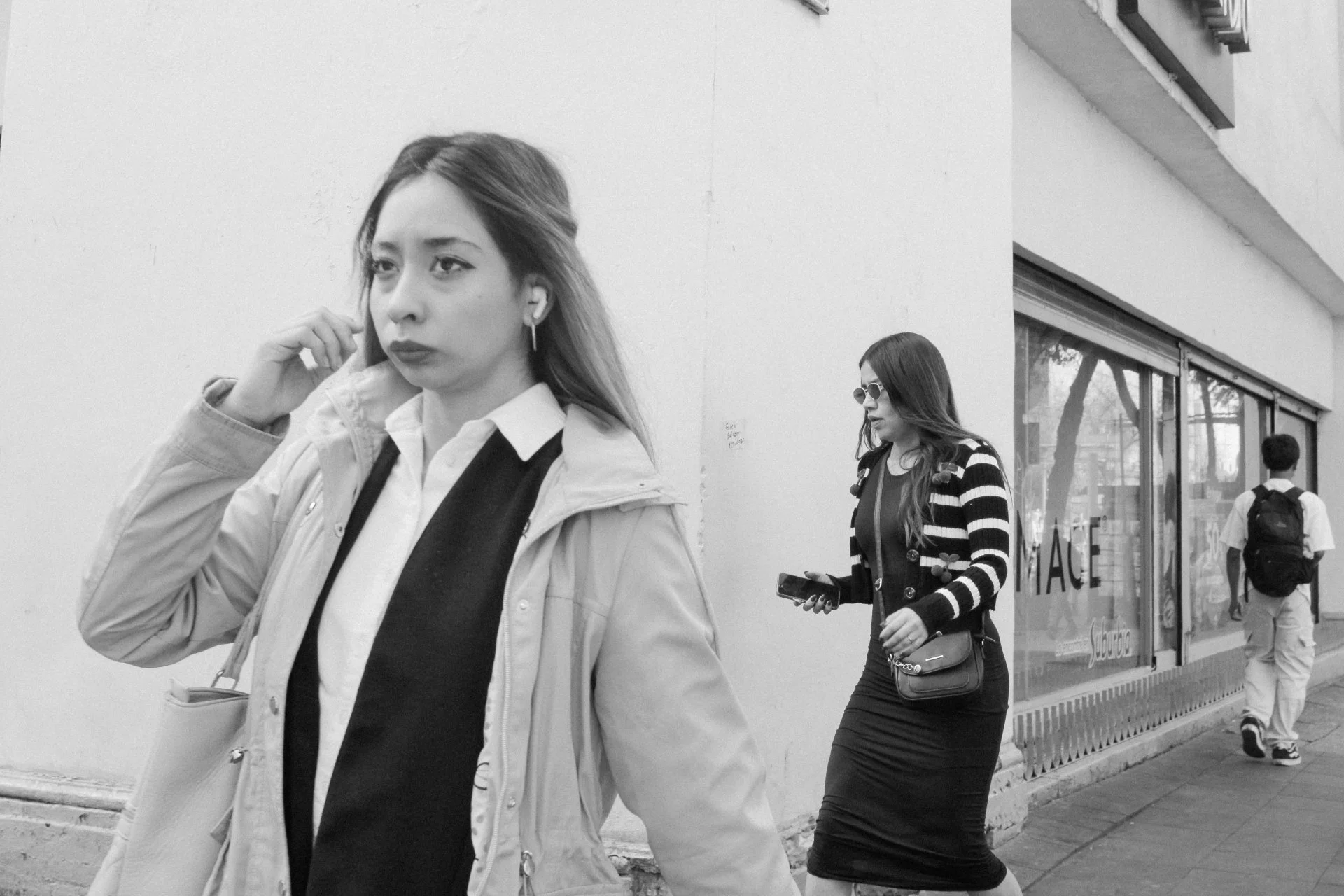
What I did here is imposing structure onto randomness.
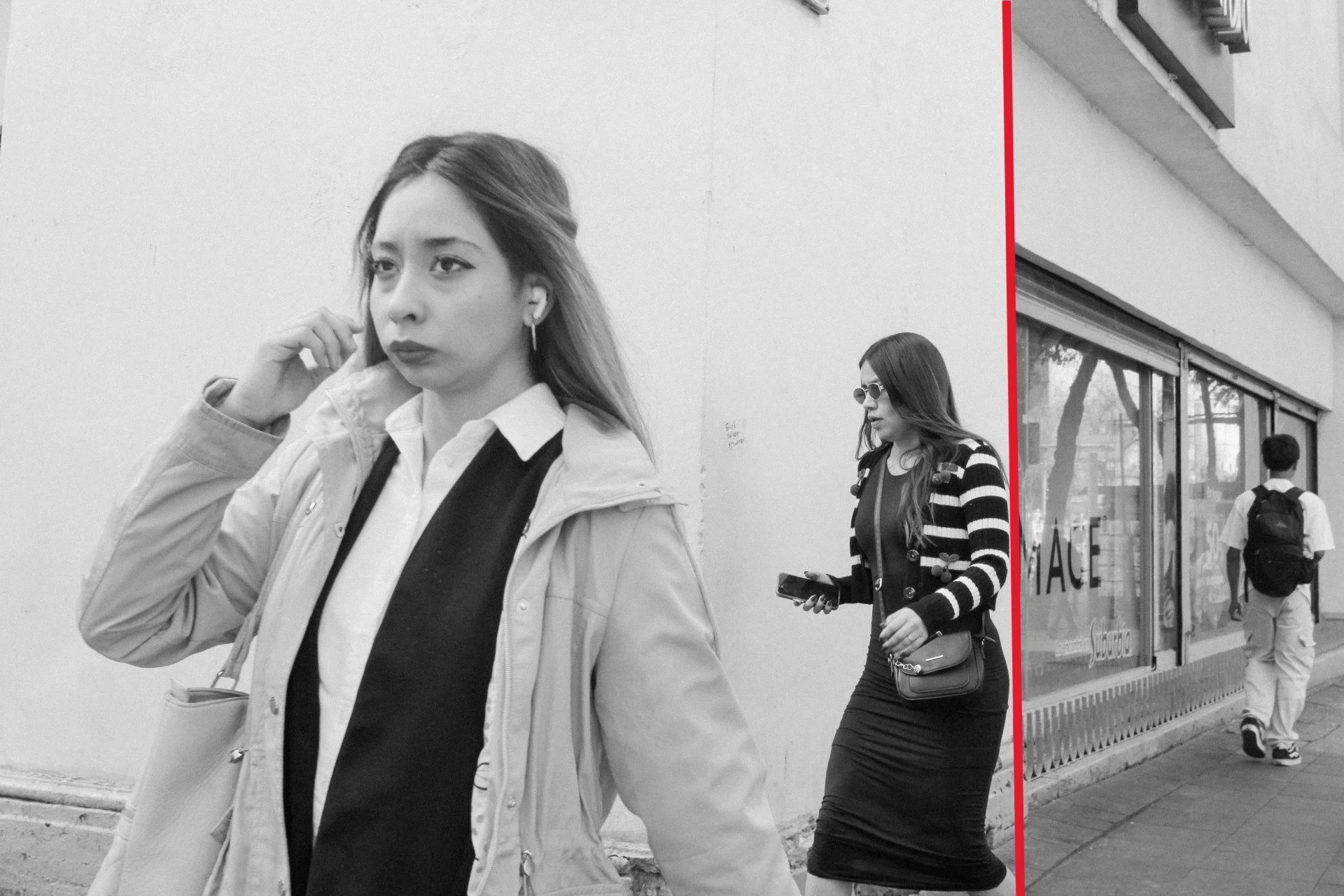
A Hard Vertical Split
The wall creates a decisive division of the frame.
Left side:
Clean
Minimal
Dominated by a single subject
Right side:
Layered
Deep
Multiple figures and visual elements
This split is what gives the image that subtle composite feeling: like two separate images stitched together.
The Illusion of a Composite
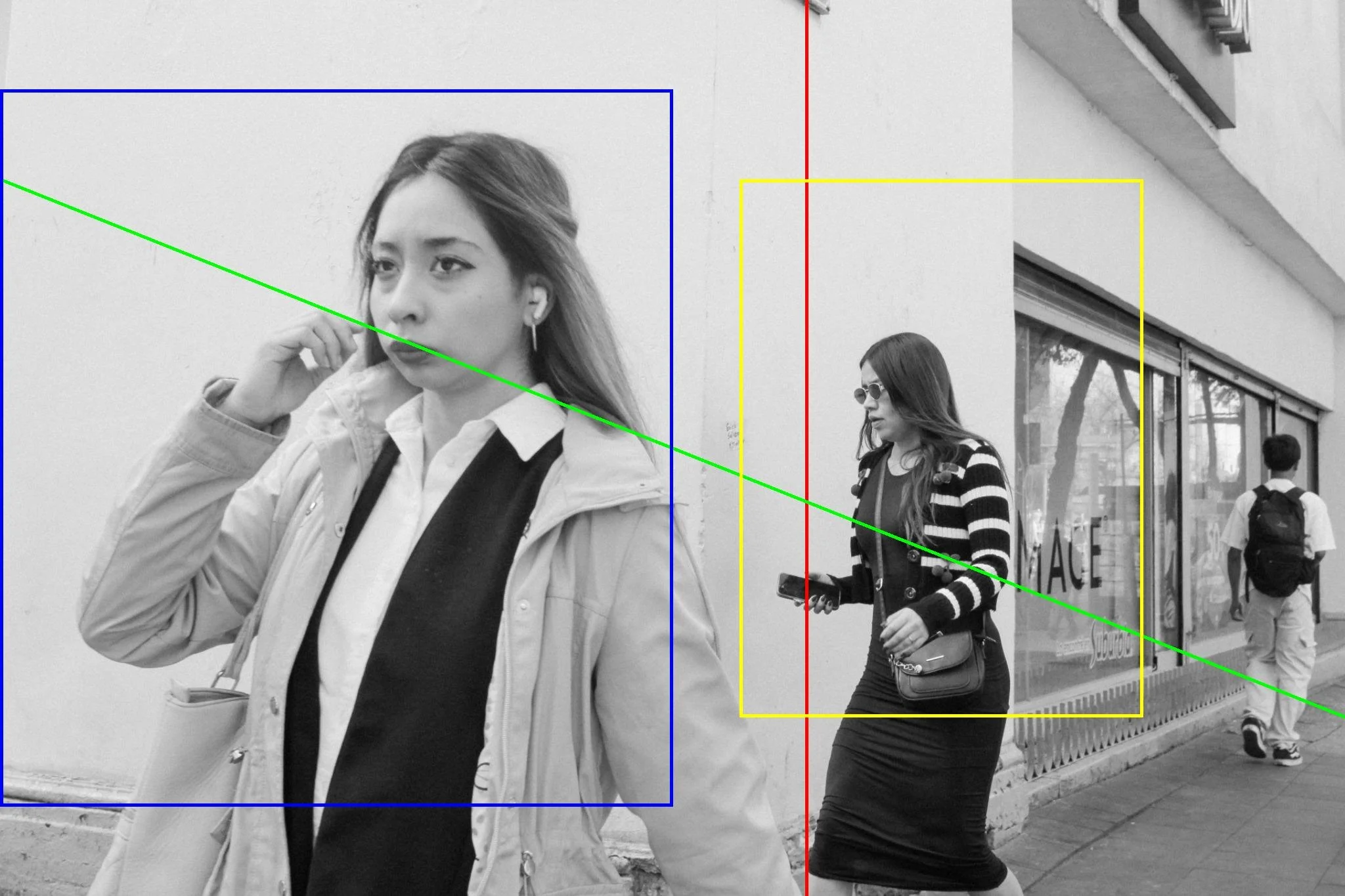
The scene reads almost as if it were constructed in post.
Why that happens:
The two main subjects don’t acknowledge each other
They belong to visually different zones
Their gestures and directions don’t align
The wall acts as a visual “cut”
It feels like two timelines coexisting in one frame.
But it’s just timing and positioning.
One Frame, Not Two
Both women belong to the same visual structure.
They are held together by the wall:
Same flat background
Same compression of space
Same visual silence
Even if they don’t interact, compositionally they are part of a single system.
This is important, because it removes the obvious reading of “two separate scenes”.
The Real Cut Is Architectural
The actual break happens where the wall ends.
That’s where:
The flat surface disappears
Depth suddenly opens up
Reflections and layers take over
Up to that point, the image feels controlled.
After that point, it starts to breathe again.
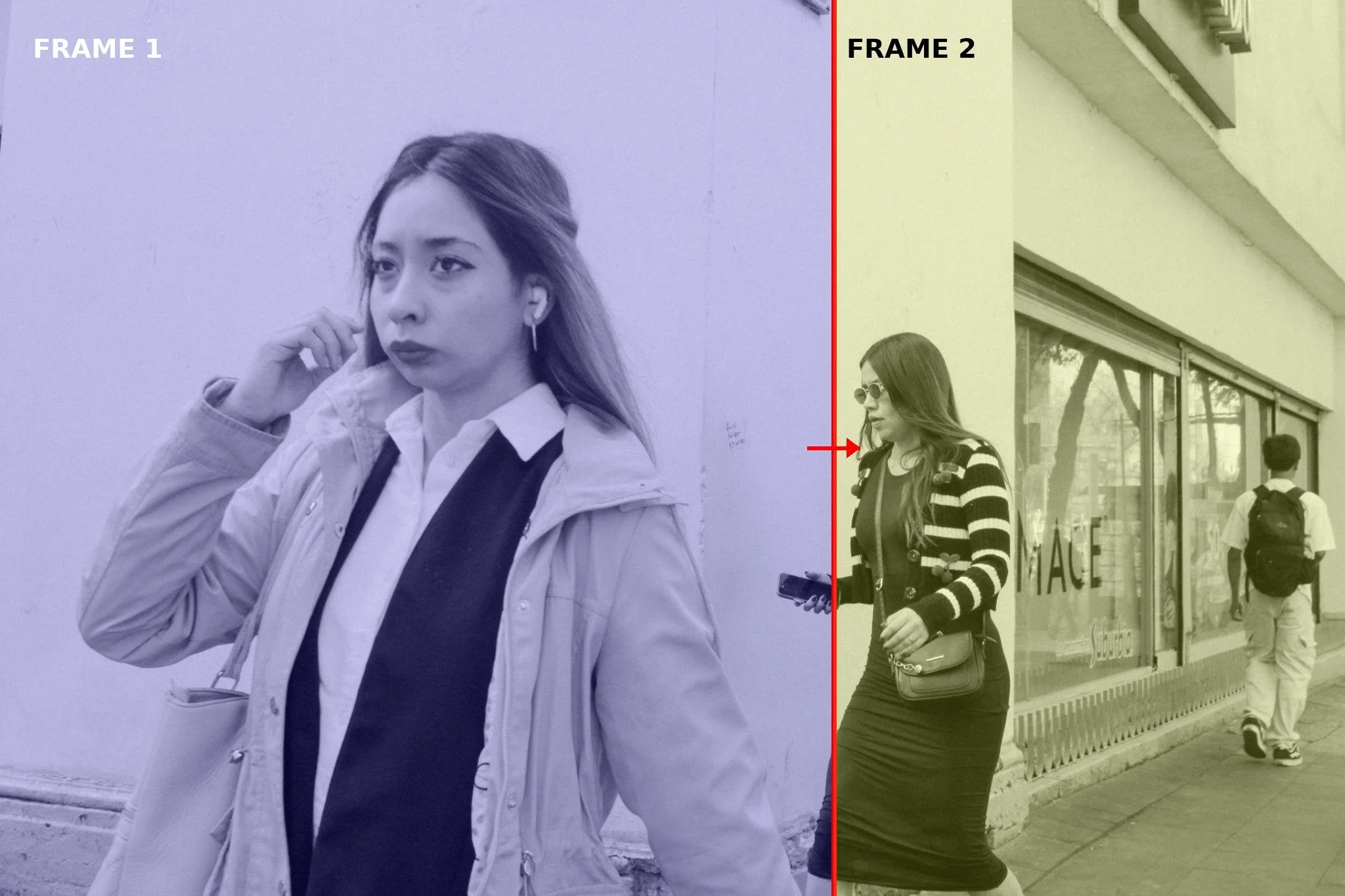
Constructed Space vs Real Space
So the image is not divided by people.
It’s divided by how space behaves.
Left side (about 80% of the frame):
Structured
Minimal
Almost staged
Right edge:
Unpredictable
Layered
Clearly “street” again
That small slice on the right is enough to destabilize everything.
The Role of Timing
This only works because the subjects fall exactly inside that structured space.
If the second woman were slightly more to the right, the illusion would collapse.
Timing here is not just about gesture.
It’s about where reality aligns with geometry.
The image doesn’t divide where the eye initially expects.
It holds everything together longer…
and then breaks exactly where the space changes.
That’s where it stops being just a moment
and starts feeling like something constructed.
It is the power to react in front of the background and something happening in front of us. This is why i consider it a powerful image.