AGAINST GROUP PHOTOGRAPHY WORKSHOPS
A Manifesto for One-to-One Photography Education
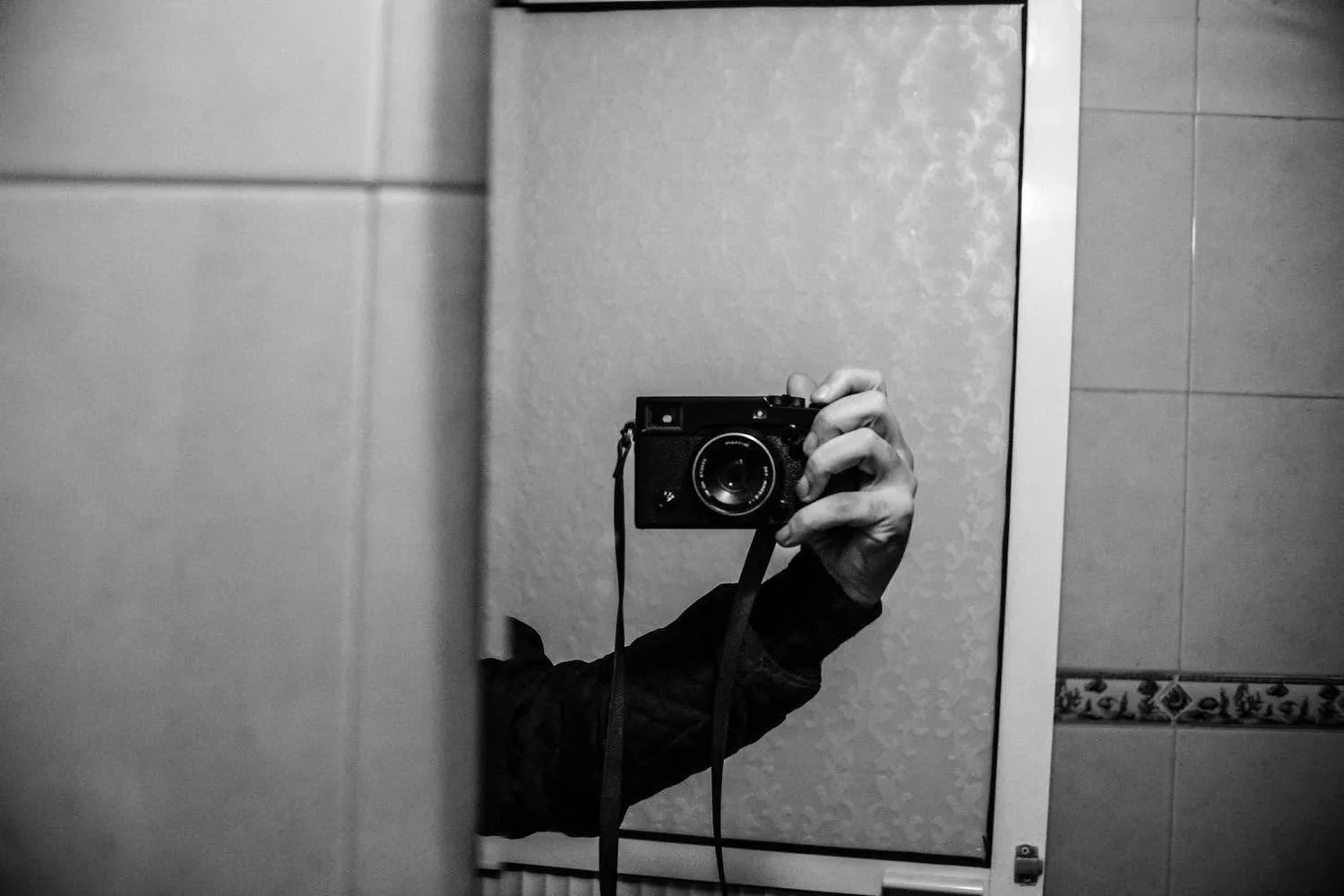
Photography is a solitary act. Stop selling the illusion that a crowd can teach you how to see.
The photography education industry has a problem. Too many workshops, too many photographic expeditions, too many self-appointed educators, and too much money being made from photographers who genuinely want to learn. My position is clear: I believe photographic workshops and expeditions should be one-to-one experiences.
And I believe it is time to question the group workshop model for what it often is: a commercially convenient product that prioritizes the instructor's income over the participant's photographic development.
1. The group workshop is a business model, not an educational ideal
Let's be honest. The more participants you recruit, the more money you make from a single workshop. One instructor, one itinerary, one set of lessons, and a room full of paying customers.
From a business perspective, it makes perfect sense.From an educational perspective, it raises serious questions.
How can one instructor provide meaningful individual attention to ten, fifteen, or twenty photographers at different levels, with different needs, different problems, and different objectives? How can an experience genuinely respond to each participant when the instructor must divide their time among an entire group?
The answer is obvious: they cannot do it properly. They can deliver a generic lesson. They can offer a few suggestions, demonstrate techniques, take participants to interesting locations, and give everyone the feeling of having attended something important.
But personalized photographic education? That is another matter entirely.
A workshop designed to maximize the instructor's revenue is not necessarily designed to maximize the participant's learning, and it doesn’t matter if the photographer is very popular. Too often, the first objective wins.
2. What exactly are you learning from these people?
There is another uncomfortable question we should ask. How many photography workshop instructors are actually working photographers?
Some are respected professionals who continue to produce meaningful work. Others seem to have built their entire professional identity around teaching workshops and organizing photographic trips. Some have little visible professional activity beyond these businesses. In certain cases, it is reasonable to wonder whether photography education has become a substitute for photographic practice itself.
And what exactly are participants supposed to learn from someone who spends most of their time selling access to destinations rather than developing their own photographic work? A famous name is not a teaching qualification. A large social media following is not proof of photographic competence. A prestigious portfolio does not automatically make someone a good mentor. Yet the industry frequently sells reputation, proximity, and the promise of an extraordinary experience as if they were equivalent to education. They are not.
Some celebrated photographers can generate an entire year's income from a single expensive photographic expedition. They may be excellent photographers. That does not automatically make their group workshops an effective way to teach.
Being a good photographer and being a good photography educator are two different things. Being famous does not excuse you from proving the value of what you sell.
3. You are not buying individual tuition. You are buying a place in a crowd.
Think about what happens during a typical group workshop. You pay a considerable amount of money. You travel to a destination. You photograph alongside a group of strangers. You listen to the same explanations as everyone else. You follow the same itinerary, whether or not it addresses your particular weaknesses. And while the instructor is helping someone else, you wait.
You may return home with interesting photographs and pleasant memories. You may even make new friends. But did you actually develop as a photographer? Did anyone have enough time to understand your work, identify your weaknesses, challenge your habits, and help you move forward? Or did you simply purchase an experience with photography attached to it?
This is the fundamental problem with group tuition. It inevitably compromises individual attention. The instructor cannot simultaneously build a program around every participant's specific needs.
A group workshop is a standardized product. It must accommodate the group, and the individual must accept whatever compromises that requires.
I refuse to build my educational work around that principle.
4. Photographic expeditions can be glorified money-making machines
The photographic expedition is particularly revealing. A destination is marketed as a unique opportunity. The instructor's name adds prestige. The itinerary promises access, inspiration, and photographic discoveries. Participants pay thousands for the privilege of following a predetermined route alongside other photographers. Meanwhile, the same locations are visited by successive groups, often following similar schedules and photographing similar subjects. The destination becomes a product. The instructor becomes a brand. The participants become customers in a carefully packaged experience.
And the photographs? Sometimes they are almost secondary to the business built around producing them.
There is nothing wrong with traveling to photograph. There is nothing wrong with charging fairly for expertise, time, and organization. But when the business model depends on filling every available place, the question of educational quality becomes unavoidable. Are these expeditions designed around the photographers who attend them, or are the photographers simply filling places in an itinerary that already exists?
If the experience would be exactly the same regardless of who signs up, you are not buying personalized photographic education. You are buying a seat on a photographic tour.
The case of Oaxaca is a prime example. Especially since COVID, I’ve seen it turn into a kind of amusement park for all these "photo tours." It’s all very sad: photographers showing no respect for their surroundings, swarming the Pantheon and treating the place like a safari park.
5. The environmental and social cost of photographic crowds
There is also a dimension that the industry often prefers to ignore. Large photographic groups can become intrusive. They can disrupt local routines, overwhelm sensitive locations, turn people into photographic attractions, and contribute to the transformation of communities into destinations for outside consumption. In environmentally fragile places, the cumulative impact of repeated visits and poorly managed groups can also be damaging. Not every group is irresponsible, and not every expedition causes harm. But the assumption that photographers are automatically harmless visitors is absurd.
Carrying a camera does not make you an ethical observer. Local people are not props. Their homes are not sets. Their lives do not exist to provide material for our portfolios. Photography requires attention, and attention requires respect. An educational model that encourages smaller, more considered encounters can make room for a more responsible relationship with the places and people we photograph.
The industry should be asking difficult questions about its impact. Too often, it is too busy advertising the next trip.
6. My alternative: one photographer, one mentor
My approach is deliberately different. I offer private, one-to-one photographic tuition. Each experience is developed around the individual photographer, their experience, their interests, their limitations, and what they actually want to learn. I do not have to divide my attention among a dozen paying participants. I do not have to impose a generic program on people with different needs. I do not have to pretend that one itinerary can provide the same value to everyone.
The participant receives my direct attention. We can adapt the experience as we work. We can spend time on the questions that matter to that photographer, rather than move on because the group schedule says it is time to leave. This is not simply a more exclusive version of a workshop. It is a different educational philosophy.
Since 2011, my work as a photo coach has been built around helping photographers develop their own way of seeing. My responsibility is not to entertain a group or deliver a standardized photographic holiday. It is to work with an individual who wants to improve. That requires commitment from both sides.
And it requires the instructor to put education before the convenience of managing a crowd.
You know, I am a real photographer, working on assignment, making international covers and my work is featured in international magazines. Please check out how many of these celebrated gurus are real photographers or just… offering workshops. And please check out also some celebrated masters…because at a certain point they stopped to have their cameras with them, they stopped to make photography, they keep to live with 3 or 4 photos but they don’t make new work anymore.
7. I am not interested in selling photographic tourism disguised as education
I have chosen not to organize group workshops or group photographic expeditions. My experiences, including my Día de Muertos photographic experiences, are private and one-to-one. This is a conscious decision, not a marketing gimmick. I would rather work with one photographer and give them my full attention than collect payments from a group and distribute my time among them. I would rather prepare an experience around a person's actual needs than sell the same package to everyone who can afford it. My model does not maximize the number of customers I can accommodate at once. It prioritizes the quality and relevance of the educational experience.
And yes, this means rejecting a business model that can be considerably more profitable per day. I am perfectly comfortable with that choice. Because I do not believe that the purpose of photographic education is to extract the maximum possible revenue from the maximum possible number of participants.
I believe it should help photographers become better, more conscious, and more independent in their work.
The bottom line
The photography workshop industry needs more scrutiny and less unquestioning admiration. Stop assuming that a famous photographer is necessarily a good teacher. Stop confusing expensive travel with meaningful education. Stop pretending that a generic group experience can provide the same attention as individual tuition. And stop accepting the idea that the instructor's commercial convenience should determine how photographic education is delivered. Group workshops are not automatically worthless. But too many are sold as transformative educational experiences when, in reality, they offer standardized instruction, limited individual attention, and a highly profitable arrangement for the person running them.
Photography is a solitary act. Your education should respect the photographer you are, not treat you as another paying place to fill.
One photographer. One mentor. One experience built around the individual.
That is my position. And I stand by it.
Alex Coghe
Photographer and Photo Coach