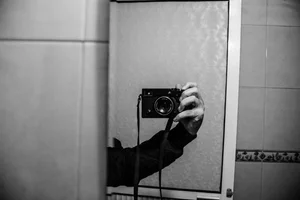

Balloons and Armed Escorts in the Mountains of Guerrero
Journalism and risk even when you are making a work where the focus is only the craft.
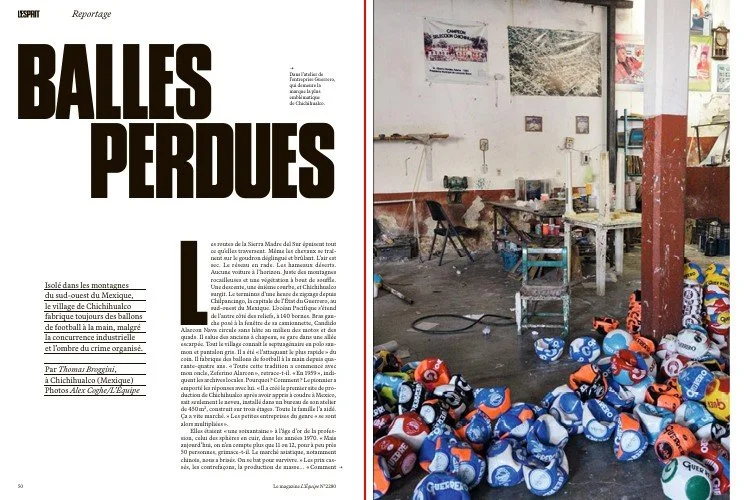
This assignment for L’Équipe in Chichihualco, in the mountains of Guerrero, never really felt like a “normal” photo job from the beginning. Some places you arrive in and you immediately understand the rules. Here, the rules were never spoken. You just feel them in the way people look at you, in the way silence sits inside conversations, in the way the landscape seems to absorb everything.
The road up to Chichihualco already tells part of the story. Mountains closing in, long stretches of empty space, small signs of life that appear and disappear as you move through them. It is a region that holds its beauty tightly, but also its tension.
On the first day we were escorted for around 30 kilometers by a police camioneta. Armed officers, visible weapons, no unnecessary words. The convoy moved slowly through the winding roads. Nobody tried to dramatize it, but nobody needed to. In Guerrero, security is not a concept, it is a physical presence that travels with you.
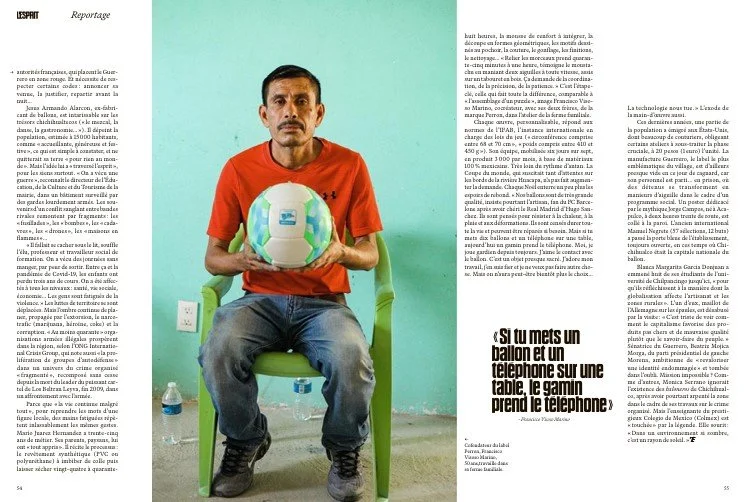
Arriving in Chichihualco, the subject of the assignment revealed itself in contrast to everything surrounding it. The baloneros. Men realizing balloons in their labs, making od the color a form of daily work. At first glance it feels almost disarming.
The longer you stay, the more that first impression shifts. This is not just a visual scene. It is labor. It is repetition. It is economy in its most immediate form. Every balloon has a weight that is not visible in the frame.
Photographing them required a different approach than usual. There is a temptation in street photography to move fast, to take, to react. Here that instinct had to be slowed down. The presence of the camera had to dissolve into the environment rather than dominate it. You wait more. You observe more. You take fewer images, but each one comes with more negotiation, even if silent.
What stayed with me was the constant presence of the mountains. They are not a backdrop. They behave like a second subject. They compress the space, define the rhythm of life, and remind you that isolation is not an abstract idea here. It is geography.
Working under the banner of L’Équipe adds another layer that is hard to ignore. There is always a responsibility when your images will travel far from where they were made. Especially in a place where visibility is already complicated. You are not just photographing what is in front of you. You are translating a reality that is already under pressure from how it is seen, or not seen.
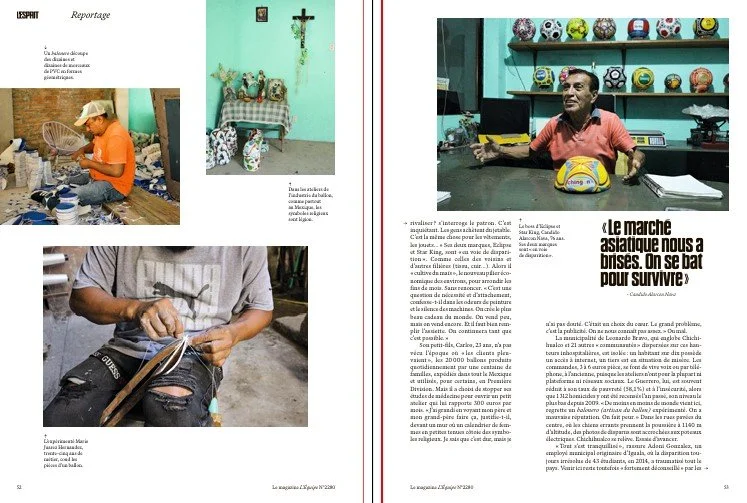
The most powerful contradiction of the entire experience sits in that tension between lightness and weight. The balloons are almost aggressive in their color. They demand attention. But everything around them speaks in a lower tone. The result is a visual field where joy and difficulty coexist without cancelling each other out.
Even the act of leaving felt like part of the story. The same 30 kilometer escort back down, the armed presence still there, the mountains slowly giving way to distance and noise. A reminder that access is never innocent. It is always structured, always conditional, always part of the narrative whether you want it to be or not.
In the end, what remains from Chichihualco is not a single image, but a tension that runs through all of them. Between what appears and what supports it. Between surface and context. Between the color of balloons and the silence of the mountains that hold them in place.