
I’ve Got a Problem with the Sony World Photography Awards 2026 (Street Photography Category)
The Sony World Photography Awards 2026 — Street Photography Winners & Shortlist are out, and honestly? The reaction from serious street photographers isn’t just disappointment : it’s frustration. And they are right with that, because we can talk about a scandal.
Before you say “it’s just one photo contest,” let’s be clear: this isn’t about one single image or even one year. This is about what happens when a global “prestigious” competition sets the narrative about what street photography is: and in doing so, signals that the genre still doesn’t deserve the respect and seriousness it actually demands. I published a reaction video on THE STREET PHOTOGRAPHY CHANNEL:
Only after making the video I realized that I completely skipped the winning photograph so I need to talk about this here:
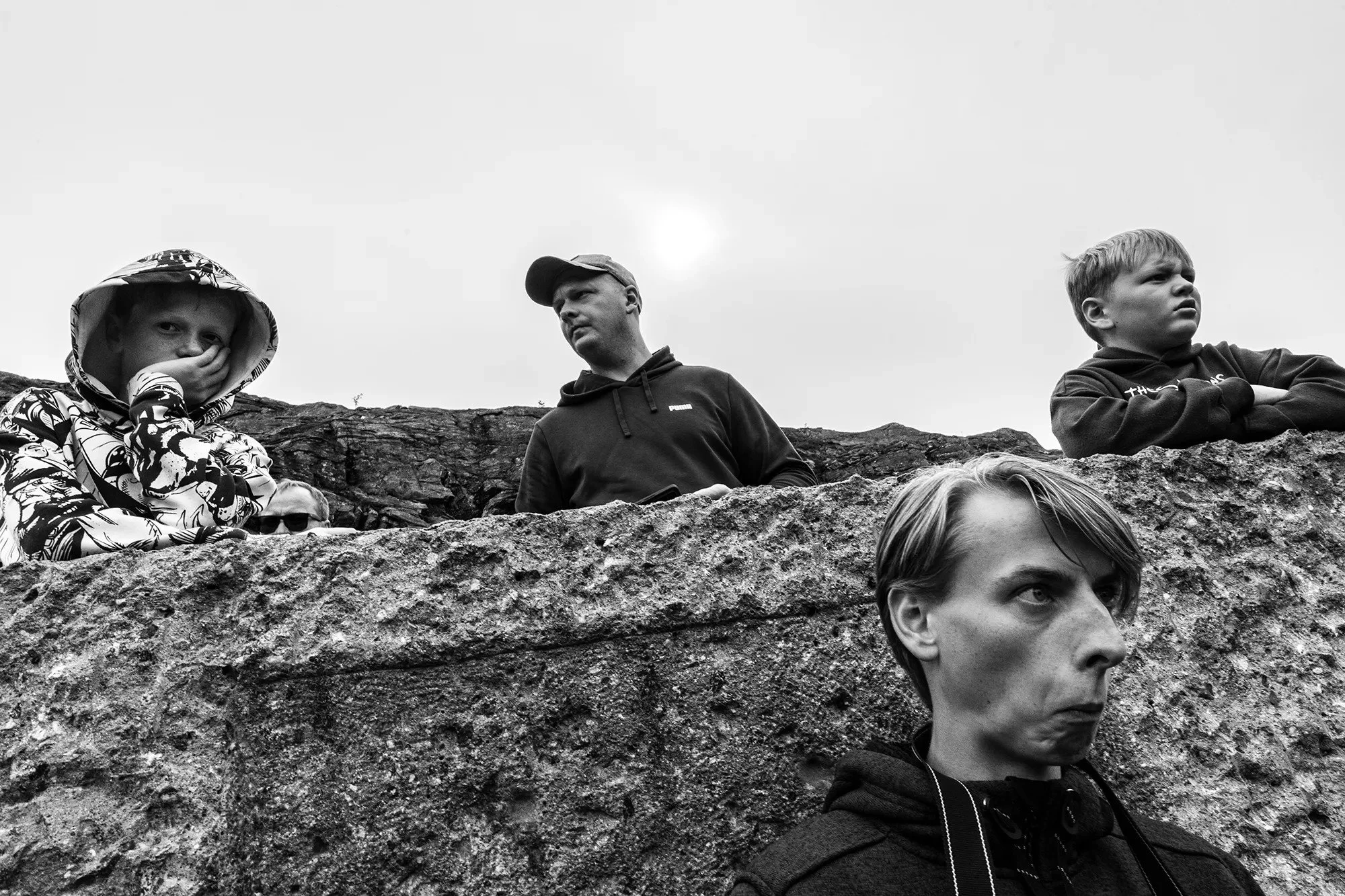
Giulia Pissagroia
The Winner and the Shortlist: What They Chose
Sony says: that the winning image in the Street Photography category was “Between the Lines” by Giulia Pissagroia, a black-and-white candid shot of a family looking at a view in Norway. The shortlist includes a range of interesting moments from running children and animals, to city nights and cultural scenes.
On paper that looks fine. But beneath the surface, there’s a deeper issue. And they don’t get it. Year by year, they don’t get it.
Here’s What’s Really At Stake
For many of us who live the streets every day: shooting in unpredictable light, who wrestle with real, fleeting human moments, this feels like a continuation of a trend: competitions with massive reach choosing images that are either safe, aestheticized to death, or just not representative of what street photography actually is for the nerds with a camera, lacking of visual culture, lacking of the knowledge to make a good photograph without counting in a heavy post processing in order to fix the issues.
Street photography should be about grit, empathy, context, the push-pull between humanity and life as it actually unfolds and not just a nice snapshot of a family outdoors. That’s not disrespectful to the photographer: it’s a critique of the context that praises form over substance. And yes, that matters. Because the awards carry weight. They shape what brands, clients, and the public now call this pile of crap “good street photography.”
More Than Aesthetic: It’s About Respect
I am not angry because someone else’s photo won. I am angry because this win signals something: that street photography can be treated as a category filler, a pretty vignette that fits a formula rather than a discipline that challenges us, that confronts life, that digs into complexity and humanity. something completely reproducible from images generated with artificial intelligence.
The shortlist presents only awful images. And I am sorry but I believe that there were a lot of photographers submitted better than the winning images. But the problem, the big problem here are not the photos selected as the winners: the big problem are the judges. Their lack of visual culture, their knowledge of the aesthetics, approach and hystory of street photography. Yes, I see this from their choices. I ignore who the fuck are the judges here and I really don’t care: it is sufficient to look at the photos selected to understand THEY ARE NOT STREET PHOTOGRAPHERS. And that is the first big problem.
This selection doesn’t respect street phootgraphy because the judges don’t know the difference beetwen a street photograph and a photograph made on the street.
It’s Not Just Me Saying This
Look at how thousands of photographers online question the legitimacy and impact of so-called “prestigious awards.” On forums, people argue that many photo competitions have become bloated with categories that hardly reflect real photographic practice. They often feel like they reward popularity or safe visual tropes more than real craft, vision, or depth. It is not a cospiracy theory mine, it is the reality right now with festivals and awards.
This means that when huge global contests designate winners, they influence how the market, galleries, and even younger photographers think about what matters, and that’s why this matters to all of us. I'm not just criticizing photos here, I'm doing much more: I'm exposing myself to try to subvert this state of affairs and therefore it's a cultural criticism.
We Need Better Representation, Not “Safe” Winners
Street photography is not a postcard. It’s a dialogue, a challenge to look deeper at life around us: and it deserves platforms that reflect that. Awards should not just celebrate pleasing aesthetics. They should reward risk, curiosity, depth, and humanity. Street Photography can0’t be represented from these photos!
If the biggest global competitions keep handing out these “safe” trophies, the rest of the world gets the message: street photography doesn’t need to push boundaries. That’s exactly the opposite of what the genre is about. It is something for the rich kid with a camera, making innocent photos.
What We’re Calling For
We’re not saying awards are inherently bad. But if iconic contests like the Sony World Photography Awards want street photography to matter, they need to:
• engage judges who live and breathe street photography
• value images that reflect the messy, tough reality of human life
• be transparent about their criteria, so we know if they value commercial gloss or real storytelling
Because right now, the message seems clear: if your image is polished and pretty and fake, it might win. If it’s raw, challenging, or bold, it almost certainly won’t.
This Should Be a Wake-Up Call
If street photography truly matters, f it’s more than a trend or an Instagram filter paradise, we as a community have to fight for how it’s represented. Let’s have this conversation. Let’s call out what’s lazy, what’s superficial, and what undermines our art.
The awards didn’t “murder” street photography. But this season’s choices are a reminder: we still haven’t gained the respect we deserve.
The Bigger Issue: The Fake Look Epidemic
Let’s talk about something nobody wants to say out loud.
Over-processed street photography is everywhere.
Clarity slider pushed to 100.
HDR halos around every edge.
Artificial contrast that screams instead of whispers.
Textures exaggerated to the point that skin looks like cracked asphalt.
Street photography is becoming digital illustration.
The obsession with hyper-detail and cinematic presets is turning real life into a visual gimmick. Instead of observing light, photographers are manufacturing it in post. Instead of respecting the scene, they are redesigning it.
And competitions reward this.
Because hyper-processed images pop on screens. They grab attention in two seconds. They look “impressive.”
But impressive is not the same as meaningful.
When post-production becomes the protagonist, photography becomes secondary.
Street photography is about seeing. Not over-rendering.
Seriously, Henri Cartier-Bresson would laugh at this huge amount of crap.
Changing the Game: The Alex Street Photography Awards
This is exactly why I launched the Alex Street Photography Awards. You are all invited to participate. It is an award including fee but we accept also 1 photograph for free. Started 2 years ago we are already making the difference, as you can see from the past winning images.
Not as a vanity project.
Not as a reactionary stunt.
But as a corrective.
The goal is simple:
Reward real street photography.
Work that respects the integrity of the moment.
Work that prioritizes human presence over digital spectacle.
Work that understands that light is something you wait for, not something you manufacture in Lightroom.
We don’t reward HDR drama.
We don’t reward clarity slider aggression.
We don’t reward aesthetic trends.
We reward vision.
We reward coherence.
We reward honesty.
We reward photographers who actually spend time in the streets, not time polishing pixels.
Street photography deserves a platform that understands its responsibility.
If the big institutions won’t protect the integrity of the genre, then it’s up to those of us who live it daily to build something better. I am doing my own thing, as I do everytime I see the mainstream doesn’t respect.
This Is Not Bitterness. It’s a Call for Standards.
If we don’t demand more, we normalize mediocrity.
If we don’t question institutions, they become complacent.
If we don’t protect street photography, it will slowly dissolve into aesthetic entertainment.
And that would be the real loss.
Street photography deserves respect. Street Photographers deserve respect.
And respect starts with standards.